
Contents
Overview
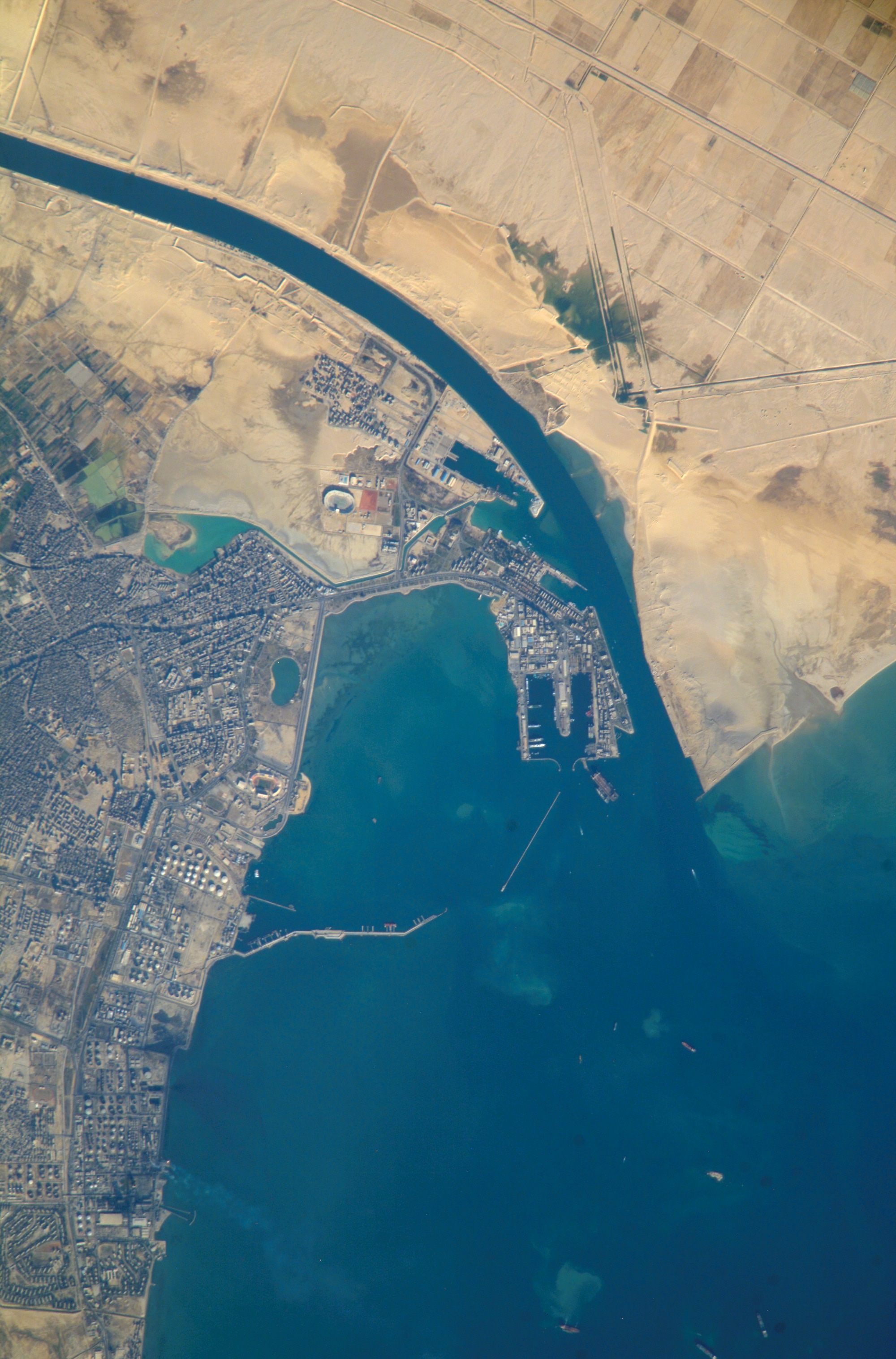
The genesis of the Suez Canal can be traced back to ancient attempts to link the Nile River to the Red Sea, but the modern conception solidified in the mid-19th century. French diplomat Ferdinand de Lesseps spearheaded the project, forming the Compagnie de Suez in 1858. Construction spanned a decade from 1859 to 1869. The canal officially opened with grand fanfare on November 17, 1869, attended by dignitaries including Empress Eugénie, wife of Napoleon III. Its completion was a triumph of 19th-century engineering, drastically reducing travel times between Europe and Asia, and fundamentally altering global trade routes, much to the chagrin of British interests who had initially resisted its construction.
⚙️ How It Works
The Suez Canal operates as a sea-level waterway, meaning it has no locks; ships pass through at the prevailing water level of the Mediterranean and Red Seas. Transits are managed by the Suez Canal Authority (SCA) from control centers, with convoys moving in specific directions on designated days to ensure safety and efficiency. The canal utilizes a series of lakes, including Lake Manzala, Lake Timsah, and the Great Bitter Lake, which help break up the journey and provide staging areas. Modern navigation relies on advanced radar, satellite communication, and pilotage to guide ships through the 193.30 km (120.11 mi) channel.
📊 Key Facts & Numbers
The Suez Canal is a colossal artery of global commerce, facilitating approximately 12% of the world's trade volume. The average daily transit rate stands at around 50 ships. The canal's revenue for Egypt reached a record $10.27 billion in 2023. Its shortest point is 205 meters (673 ft) wide, while its deepest point reaches 24 meters (79 ft). The canal's existence reduces the shipping distance between London and Mumbai by approximately 8,900 kilometers (5,500 mi). The average transit time for a vessel is between 11 to 16 hours.
👥 Key People & Organizations
Key figures in the Suez Canal's history include Ferdinand de Lesseps, the French diplomat and engineer who championed its construction and founded the Compagnie de Suez. Isma'il Pasha, the Khedive of Egypt, granted the concession for the canal's construction. Gamal Abdel Nasser, as President of Egypt, nationalized the canal in 1956, an act that led to the Suez Crisis of 1956. The Suez Canal Authority (SCA) is the state-owned entity responsible for the operation, maintenance, and management of the canal, established in 1957 following nationalization. Current leadership within the SCA plays a crucial role in its ongoing development and strategic direction.
🌍 Cultural Impact & Influence
The Suez Canal's impact extends far beyond economics, deeply embedding itself into global culture and geopolitics. It became a symbol of imperial ambition and national sovereignty, famously at the heart of the Suez Crisis in 1956, a pivotal moment that signaled the decline of British and French global power and the rise of American and Soviet influence. Its strategic importance has been a recurring theme in international relations, influencing military planning and diplomatic maneuvering for over a century. The canal's image has appeared in art, literature, and film, often representing a gateway between worlds or a site of intense international conflict. Its very existence is a testament to human ingenuity and its capacity to reshape the planet's geography.
⚡ Current State & Latest Developments
The Suez Canal is currently undergoing significant expansion and development projects to accommodate larger vessels and increase transit capacity. The 'New Suez Canal' project involved digging a parallel 35-kilometer (22 mi) channel, doubling the canal's capacity and allowing for bi-directional traffic in certain sections. Further deepening and widening projects are ongoing to accommodate the largest container ships and oil tankers. The Suez Canal Authority (SCA) is also investing in advanced digital technologies for traffic management and security. Recent challenges, such as the grounding of the MV Ever Given in March 2021, have highlighted the need for enhanced safety protocols and contingency planning.
🤔 Controversies & Debates
The nationalization of the Suez Canal in 1956 by Gamal Abdel Nasser remains a highly contentious event, sparking the Suez Crisis involving Britain, France, and Israel. This event is debated for its role in accelerating the decline of European colonial powers and reshaping the geopolitical landscape of the Middle East. Another ongoing debate concerns the environmental impact of increased shipping traffic, including potential pollution and the introduction of invasive species through ballast water. Furthermore, the canal's role as a chokepoint for global energy supplies raises questions about its vulnerability to political instability or military action in the region, prompting discussions about alternative shipping routes.
🔮 Future Outlook & Predictions
The future of the Suez Canal likely involves continued expansion to accommodate the ever-growing size of global shipping fleets. There is also a growing focus on integrating smart technologies, such as AI-powered traffic management and autonomous vessel navigation systems, to enhance efficiency and safety. The development of surrounding industrial and logistics zones, such as the Suez Canal Economic Zone (SCZone), aims to leverage the canal's strategic location for broader economic growth in Egypt. However, the long-term viability could be influenced by the development of alternative routes, such as the Northern Sea Route or overland transport corridors.
💡 Practical Applications
The primary practical application of the Suez Canal is as a vital maritime trade route, connecting the Mediterranean Sea to the Red Sea. It serves as a critical conduit for the global transport of goods, including oil, manufactured products, and raw materials. For the Suez Canal Authority (SCA), its operation is the core business, generating significant revenue for Egypt. Beyond shipping, the canal's surrounding areas are being developed into economic zones, attracting investment in logistics, manufacturing, and services, aiming to capitalize on its strategic position. It also plays a role in regional security, with its control and accessibility being a constant consideration for international powers.
Key Facts
- Category
- technology
- Type
- place